
MARFAM WEEKLY E-NEWSLETTER 10 JUNE 2026
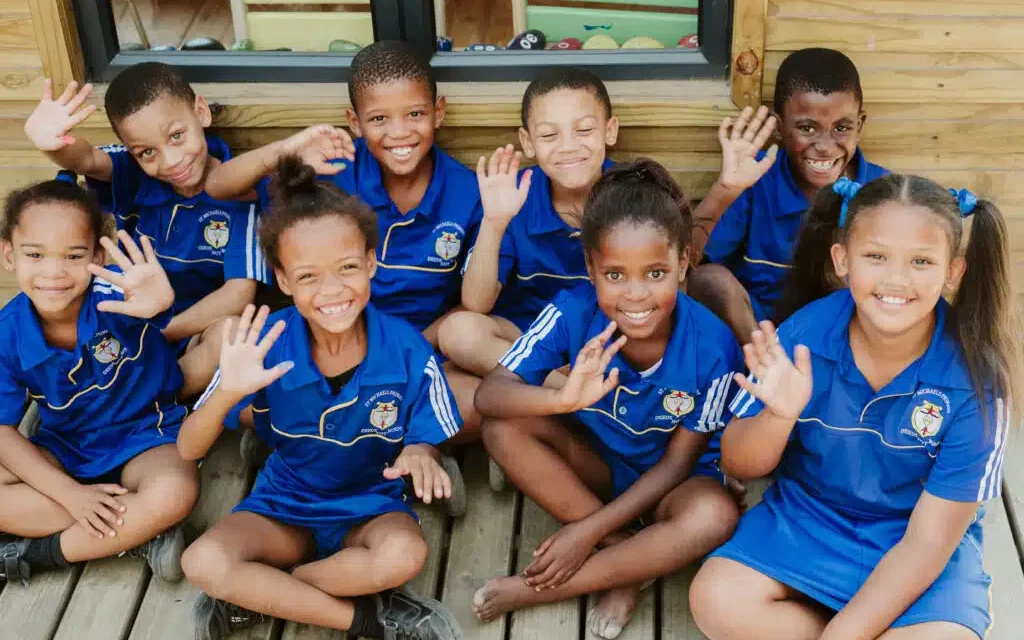
“Children belong in families” is the MARFAM theme for the month of June, which also includes a focus on youth and on fathers. These family realities are commemorated nationally or commercially, but unfortunately maybe not widely in the Church in support of our families, as they are not recognized liturgically. Pope Francis once said that the commercial world or the public arena is more alert to the needs of families than the church is. It is a pity of course that these types of events become consumer driven rather than just an opportunity to spend time with one another or at least recognize one another. For those many children and youth, who don’t have a father in their lives, Fathers’ Day can be a sad one. Parents who don’t have a child can also experience a sense of loss, but such events are nevertheless important to raise awareness of a particular value and to be able to acknowledge a personal sadness as a lack. How should society and its families deal with losses and imperfections, or limitations as Pope Leo notes in Magnifica Humanitas? In his encyclical on AI where he unpacks many issues and ends with the call to become a civilization of love he notes that imperfection is what makes us human, it helps us grow and also become conscious of the reality of others. Right now in South Africa there is a complex migrant problem. In how many ways does that not affect the children?

When I was putting these thought together I first wrote “children and youth in alternative families,” and then changed it to “alternative care.” Does care indicate some kind of family or not? If a child is not living with their own family do they seek a substitute or is our society becoming such that we don’t notice particular family-like qualities and almost impersonally look for love where we can find it? Fatherly, parental or child-parent love are special, even though they can be experienced in different ways.
Looking for love and developing a sense of belonging are natural human psychological needs across the life span. I’ve always liked psychologist Erikson’s theory of developmental stages of life, as they could make a lot of sense to a growing parent, even offering a sense of security and confidence about the way to deal with kids growing through these stages.
Erik Erikson’s theory of psychosocial development outlines how social interactions and relationships shape personality and identity across eight stages, with the first five specifically dedicated to childhood and adolescence. Successfully navigating each stage, before moving on to the next stage, should lead to healthy development and core ego strengths. The childhood and adolescent stages are detailed below:
- Trust vs. Mistrust (Birth to 18 months)
- The Conflict: Infants learn whether they z the world to meet their basic needs (food, comfort, affection).
- The Outcome: Responsive caregiving fosters hope and a sense of safety, whereas inconsistent or neglectful care leads to mistrust and anxiety.
- Autonomy vs. Shame and Doubt (18 months to 3 years)
- The Conflict: Toddlers begin to assert their independence and explore their environment (“me do it” stage).
- The Outcome: Encouragement builds willpower and self-esteem, while over-control or harsh criticism leads to feelings of shame and low self-confidence.
- Initiative vs. Guilt (3 to 5 years)
- The Conflict: Preschoolers assert power over their environment through play, social interaction, and making up games.
- The Outcome: Success leads to a sense of purpose and the ability to lead others. If children are made to feel that their activities are silly or intrusive, they may develop a sense of guilt.
- Industry vs. Inferiority (6 to 11 years)
- The Conflict: School-age children begin to cope with demands, new social and academic comparing themselves to peers.
- The Outcome: Support and encouragement foster competence and a belief in their skills. Negative feedback or failure to keep up with peers can result in feelings of inferiority.
- Identity vs. Role Confusion (12 to 18 years)
- The Conflict: Adolescents explore different social roles, beliefs, and values while trying to figure out “who they are”.
- The Outcome: Successfully navigating this stage yields fidelity (the ability to commit to others and oneself). Unresolved conflict leads to role confusion and insecurity about the future.

It should be helpful for parents to have some insight into this process as we don’t always understand what is going on with our children. Of course in most families there is not just one, but more children of different ages and at different stages and each child is also unique. Ideally a trained volunteer or professional child and youth care worker or school counsellor would be more familiar with childhood development than parents, as they are often the person having to deal with a problem situation, where there is family relationship break-down or some trauma that has resulted in children not coping successfully with their lives.
Pope Leo’s focus on AI in MAGNIFICA HUMANITAS is on positives and particularly notes its risks that should be taken seriously. Overuse of AI can make our youth but also the rest of us all lazy, but addiction and manipulation by chatbots can be very dangerous as I heard in a very enlightening but frightening podcast with Oprah just today.
Parenting is no easy task and comes in many forms and with no instruction book while little training is offered. Does society, school and church offer enough support? Each age and stage has its challenges but the teenage years are likely to be the most stressful for the young person who is dealing with many personal, hormonal and intellectual changes and challenges, apart from relationships within and beyond the family, with friends and peers. The majority of children nowadays do not live with their biological parents throughout their growing years so different people will act as the “parent” figure and maybe at different times. Stepparents, grandparents, other relatives or foster parents, a carer or a children’s home are realities as alternative forms of parenting and family life. One elderly priest friend, who was also a chaplain at a children’s home, saw himself as their grandfather. Teachers do the best they can in difficult circumstances too, as they are dealing with a large number of children. Counsellors and specialists need to be consulted before problems get out of hand.

All in all, even in situations where younger children and youth experience family difficulties it is an accepted view that whenever possible they should be connected as closely as possible to a family in some way. Ideally their own parent, grandparent or other relative, but in other cases a foster family or adoptive parents, who generously offer their help, do make a very valuable contribution to these children.
Pope Francis often spoke encouragingly to youth and Pope Leo too in this last year has often met with and spoken to youth about their future and their hopes and dreams. Recently in Africa and just this last weekend in Spain he met with half a million youth encouraging them to be true to their faith, to be evangelisers in their own world, “to reject superficiality and be sparks of a new humanity in a world marked by violence, wars and fake digital connections.”
Be real, be human, be loving. This is the message for all growing children and youth. wherever they are. Hopefully it is a gift they will have received and can pass on into their own future. TR 10 JUNE 2026
THOUGHT FOR THE DAY 10 JUNE

SEE. Mary said to her son Patrick, “you’ve been confirmed and are at university now, so you should be cleverer than me especially about AI. Patrick suggested they reflect on this extract from Magnifica Humanitatis 100. In recent years, its private use has expanded significantly, prompting growing reflection on both the opportunities it offers and the risks tied to its rapid spread. In personal use, three aspects in particular deserve careful consideration: the ease with which results are obtained, the impression of objectivity and the simulation of human communication. The speed and simplicity with which information, complex analyses, media content and practical assistance can be accessed undoubtedly makes life easier. Yet they can also encourage excessive reliance and the search for ready-made answers, and weaken personal creativity and judgment. The apparent objectivity of the responses and suggestions these systems provide can lead us to overlook the fact that they reflect the cultural assumptions of those who designed and trained them, with all their strengths and limitations. The artificial imitation of positive human communication — words of advice, empathy, friendship and even love — can be engaging and at times genuinely helpful. However, for less discerning users, it can also be misleading, creating the illusion of a relationship with a real personal subject.
JUDGE. Reflect, share. Scripture: “I have not come to abolish the law and the prophets but to fulfil them. Matthew 5:17-19 Pope Francis: Countless studies have been made of marriage and the family, their current problems and challenges. We do well to focus on concrete realities, since the call and the demands of the Spirit resound in the events of history. AL31. Pope Leo: In response to the challenges of their time, each Pope interpreted historical changes according to the Gospel, bringing to light different aspects of a single heritage: the dignity of the person, the value of work, the universal destination of goods, solidarity and subsidiarity, care for creation and the centrality of peace and fraternity. MH 45
ACT AND PRAY. Reflect, dialogue and pray on the MH 100 extract,




Recent Comments